
There it is. Number one in my mailbox. The answer to my six emails, eight enquiries and two failed phone attempts. What is it? It’s a cancellation. To be more specific, it’s a cancellation to participate in a literary festival. In the way of these things, we were invited almost a year ago, and keen to show support, I cleared the calendar, liaised with other Sparsile members and waited for the details…and waited.
I won’t name names, but it was a fairly biggish festival and I felt it was a good place to talk directly to authors about the publishing world. More and more I find a disconnect between what authors know about writing and what they know about getting published. It is not at all uncommon, for example, for authors to approach us with the hope that we will represent them to other publishing houses. Clearly, they are confused between what a publisher will do for them and the areas that an agent would normally cover. I was therefore looking forward to having a platform in which to set the record straight.
But no, there it is—the cancellation—not going away no matter how many times I squeeze my eyes tight shut and reopen them. Apparently, there has been a mix up. The creative writing timetable has grown so large that there is no room to fit in a panel by publishers. I do a bit more blinking, but it stays the same. I consider attempting to contact the organisers to argue my case, but I’ve already spent more time than it would have taken to prepare for the event in chasing them up, and I’ve lost the will to do more.
Yet, isn’t it incredible? A festival aimed at celebrating writing—a space where writers can gather to discuss honing their craft—has no interest in offering them advice about what to do once they’d finally honed it. Every day I see authors making mistakes, that could easily be corrected, when trying to sell their book: sending inappropriate genres, not reading the submission guidelines etc. Mostly, I see rumour overriding fact, and romantic images of the writer, as threadbare but beloved artist or glitzy, jet-setting icon, prevailing over the more mundane realities.
So, wouldn’t you think that the word would be out in literary circles that we need to get more publishers into the conversation? Apparently not.
Not long ago, I contacted a fairly large organization, who had been kind enough to include me in their programme in the past. I expressed my concern for the gap between writers and publishers, and explained that I had written a book specifically aimed at answering a lot of questions in this area. (HOW TO AVOID BEING PUBLISHED, release date May 26. Yes that was a plug.) I offered pre-release copies. I offered a discount. My enquiries were met by a vacuum normally reserved for the spaces between stars.
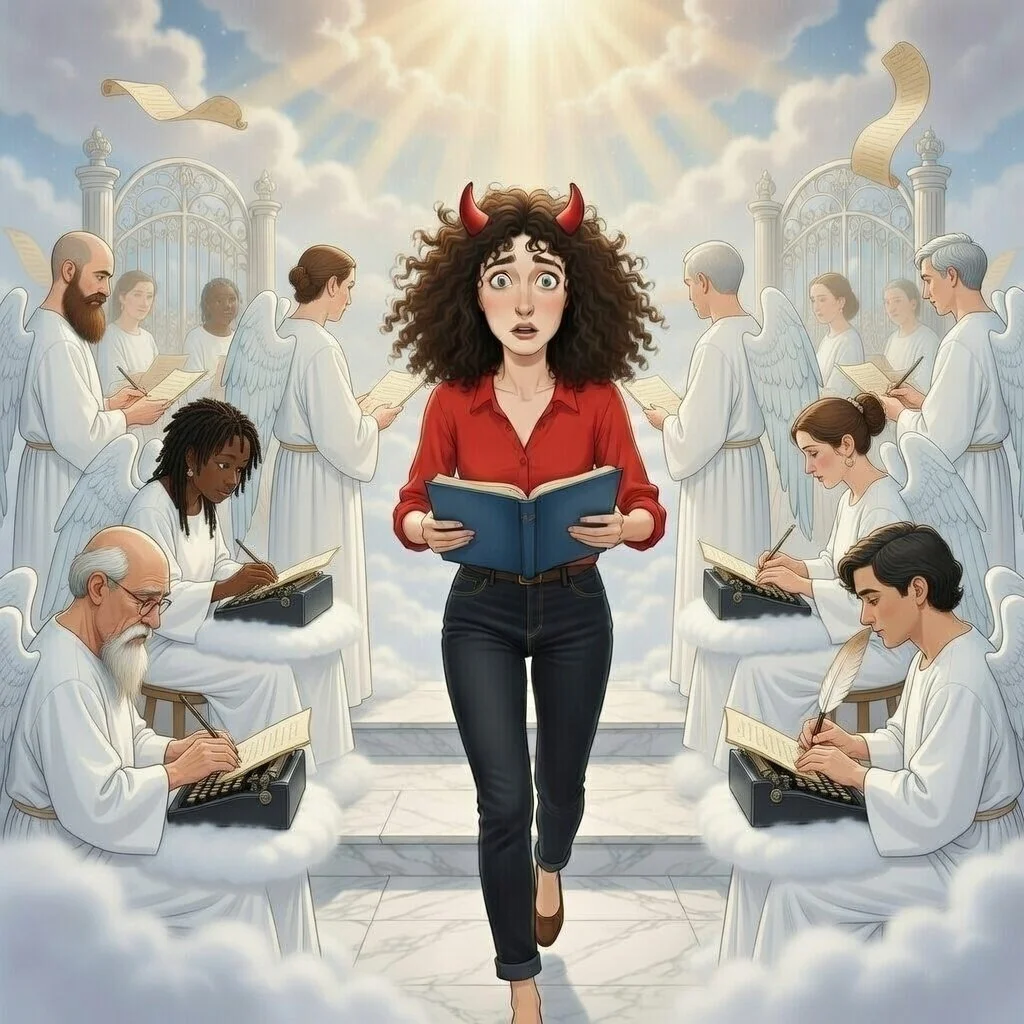
And there have many negative encounters since. Contact with literary groups often results in a dazed expression of incomprehension. I have the sense of having intruded on an ethereal, unworldly space of literary elegance in which writers hold quills and typewriters in the manner of harps and a soft radiant light bathes everything in celestial inspiration. With all my clunky practicality and myth-busting tendencies, my shadow falls like the antichrist across this lofty atmosphere. A quick ejection is the only answer, and I am expelled—Lucifer-style—back to the grubby nethers of the publishing underworld.
Yet the questions writers want answers to persist. Participating in a university careers day, I was surrounded by creative writing students eager to find out more about the publishing industry. Their fresh faces fell when I explained that a lot of publishing has to do with selling and that the best book doesn’t always win, that the pay is poor and the hours long. They fell silent then drifted away wiser but sadder. I watched them go feeling like a heel. Uh oh, perhaps I am the publishing antichrist!